 Visit Tokyo Guide
Tokyo Christmas Market: Dates, Tickets, Lights and New Year's Eve
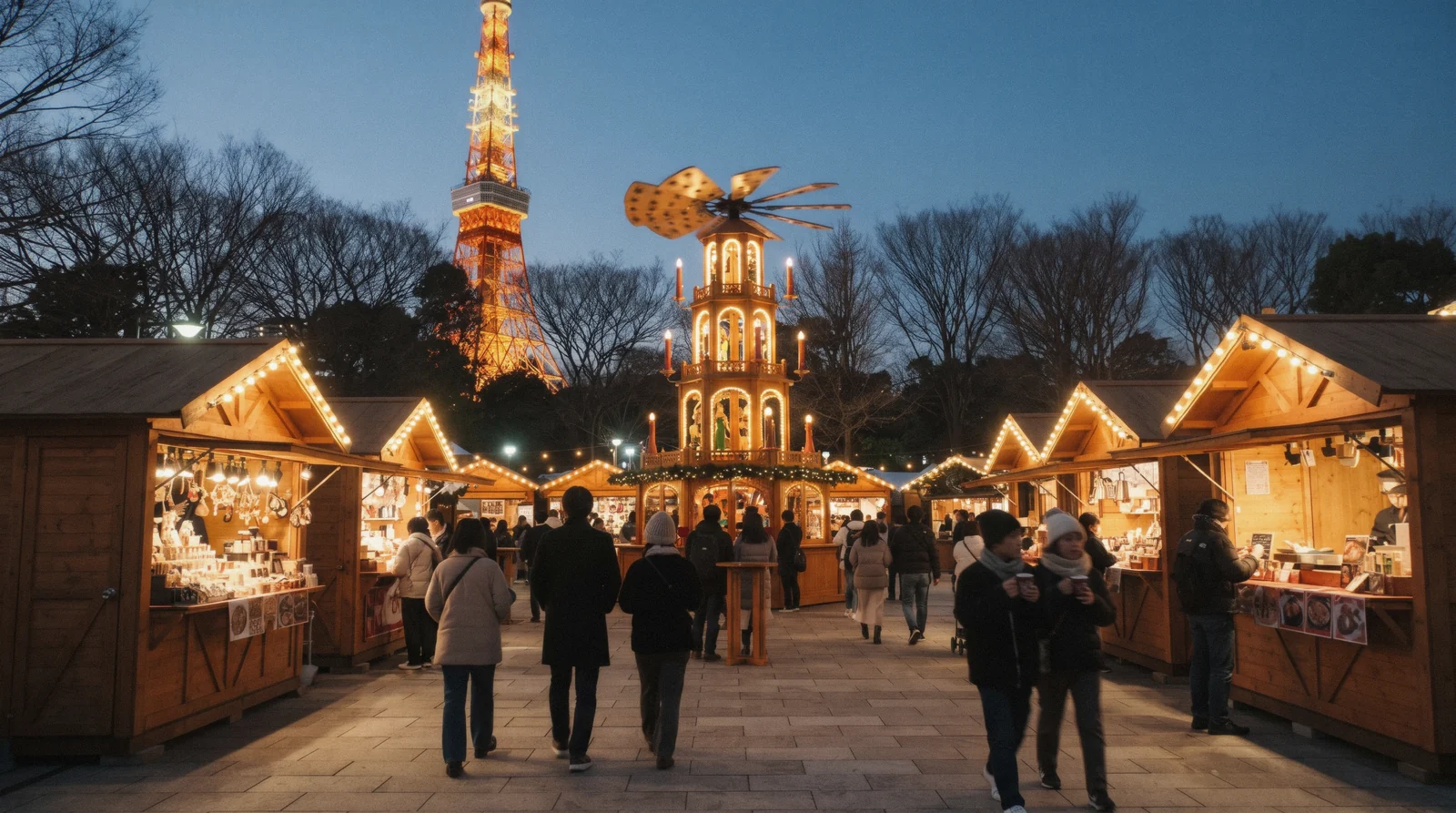
The Tokyo Christmas Market runs at two venues this season: Shin-Toyosu on Tokyo Bay from November 20 and Shiba Park under Tokyo Tower from December 4, both until December 25. This guide covers what a ticket costs and how the mug works, which venue to pick, the free markets at Roppongi Hills, Azabudai Hills and Skytree, and the Christmas lights with the dates each one runs. It also covers what Christmas Day is like in Tokyo and how New Year's Eve actually works, from the temple bells and shrine crowds to the trains that run all night. For the rest of the year, see things to do in Tokyo and the Tokyo events calendar.
Quick answer Venues, ticket prices, the best lights and New Year's Eve
The Tokyo Christmas Market runs at Shin-Toyosu from November 20 and at Shiba Park from December 4, both to December 25, with adult entry at $6.32 (¥1,000) on weekdays, $9.48 (¥1,500) at weekends and $12.64 (¥2,000) on December 24 and 25. Onarimon Station serves both the Shiba Park market and Zojoji temple, whose New Year bell now rings from 21:45 to about 23:00 instead of at midnight. A December 31 visitor can ring it with a ticket and still reach a shrine before the year turns.
Key takeaways
- Buy ahead: an advance adult ticket includes the venue mug at the same price as the gate, and same-day tickets stop when the daily quota runs out.
- Roppongi Hills, Azabudai Hills and Skytree Town all run Christmas markets with free entry. You pay only for what you eat and buy.
- To see four light-ups in one evening without trains, take the Roppongi and Marunouchi Christmas lights van tour for $90.
- On December 31 only JR, Keio and Keisei run all night. Tokyo Metro and Toei stop at the usual time: how New Year's Eve works.
- Every bookable evening for the season, plus the year-round options, is on Tokyo tours.
Christmas Lights, Market and New Year Tours From Tokyo
Nine bookings for the season: three ways to see the city lights, an evening at the Yokohama market with the entry ticket bought for you, a New Year shrine morning and four light shows outside the city. Most are private and priced per person, the Ashikaga trip per group of up to six. Operator prices, ratings and review counts as listed.
 from $90
Four light shows, one van
Tokyo Christmas Lights Night Tour: Roppongi & Marunouchi
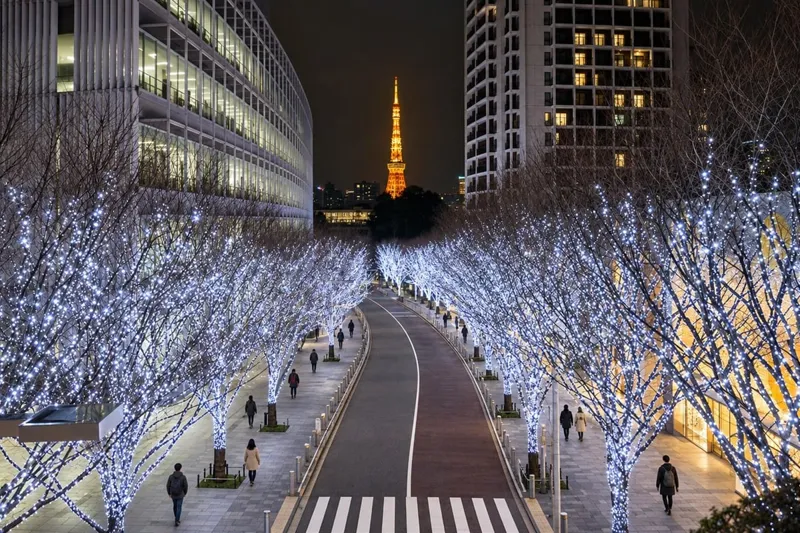
Four of the big displays in one evening by private van: Keyakizaka with Tokyo Tower at the end of the street, Tokyo Midtown, the crystal chandelier at Yebisu Garden Place and the gold trees of Marunouchi, about 45 minutes on foot at each. Hotel pickup in the 23 wards.
Check Availability from $81
Planned around you
Tokyo: Winter Illuminations Private Tour with a Local
A local host plans three hours of lights and Christmas markets around your answers to a short questionnaire, then walks it with you. Private for up to 8, one hot drink included, trains and food at your own cost. Book at least 48 hours ahead.
Check Availability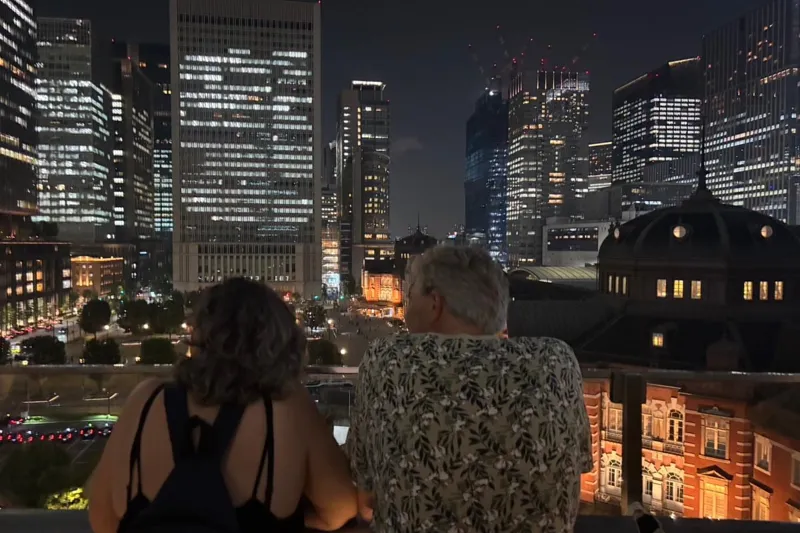 from $38
Lowest price
Tokyo: Imperial Palace Night Walk & Marunouchi Lights
The cheapest guided way into the Marunouchi lights: 90 minutes on foot from Wadakura Fountain Park past Nijubashi, along Gyoko-dori to the lit Tokyo Station, then up to the KITTE rooftop when the weather allows. Wheelchair accessible.
Check Availability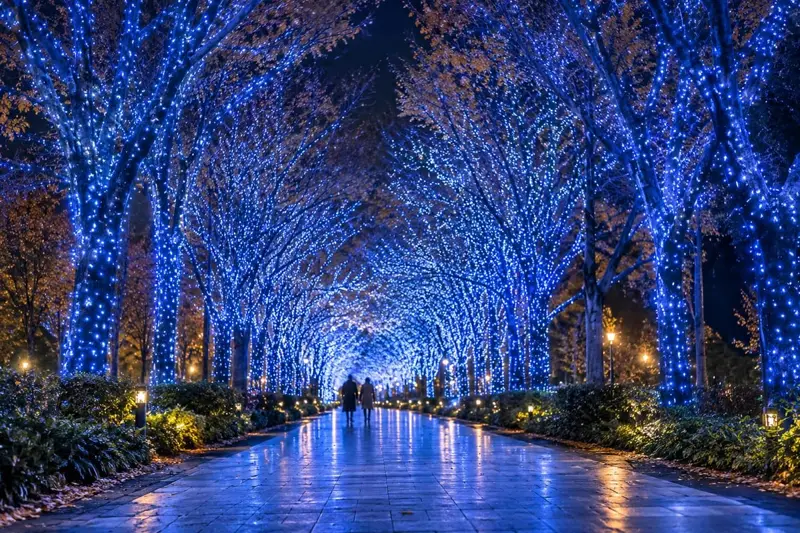 from $76
Blue Cave dates only
Tokyo: Shibuya Blue Cave & Christmas Lights Evening Drive
Runs only in the short December window when Shibuya's Blue Cave tunnel is lit, and adds Omotesando and the Baccarat chandelier at Yebisu Garden Place. Pickup at 17:00, back by about 21:00. Heavy crowds on foot at every stop.
Check Availability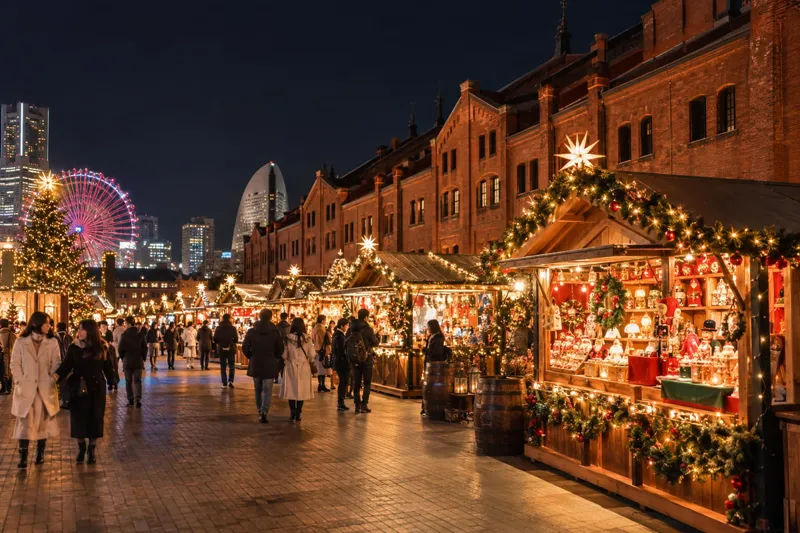 from $99
Market entry included
From Tokyo: Yokohama Christmas Market Private Evening Tour
The Red Brick Warehouse market in Yokohama with the dated entry ticket already bought, about three hours at the huts and the Minato Mirai skyline on the drive home. Evening pickup at your Tokyo hotel, so the day stays free.
Check Availability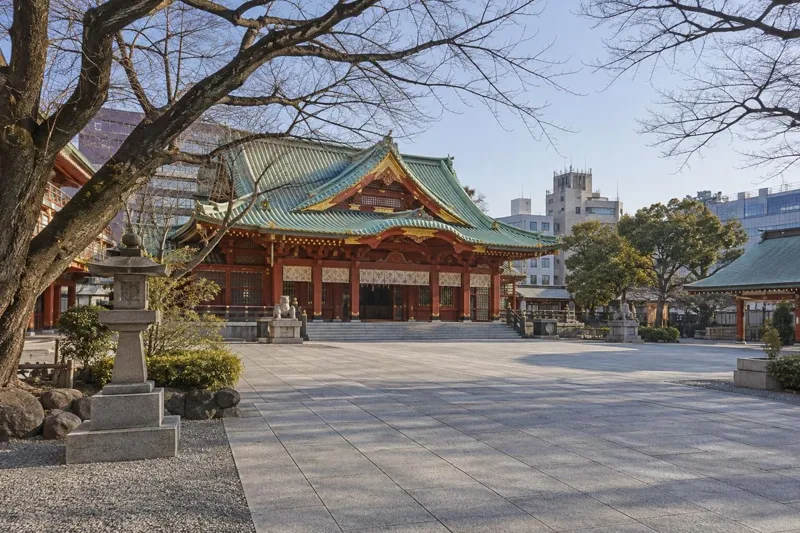 from $76
January 1 to 7
Tokyo: New Year Hatsumode & Lucky Bags Flexible Private Tour
Hatsumode the way locals do it, with a guide who knows the queues: pick three to five stops from Kanda Myojin, Hie Shrine, Zojoji, Senso-ji and the Ginza or Shibuya 109 lucky-bag sales. Runs January 1 to 7, pickup about 09:00.
Check Availability from $112
Out of the city crowds
Tokyo: Enoshima Winter Lights Flexible Private 9-Hour Tour
Kamakura in the afternoon, sunset at Shichirigahama, then the lit Samuel Cocking Garden and the Sea Candle tower on Enoshima, both tickets included. Pickup about 13:00, back about 22:00. Many steps on the island.
Check Availability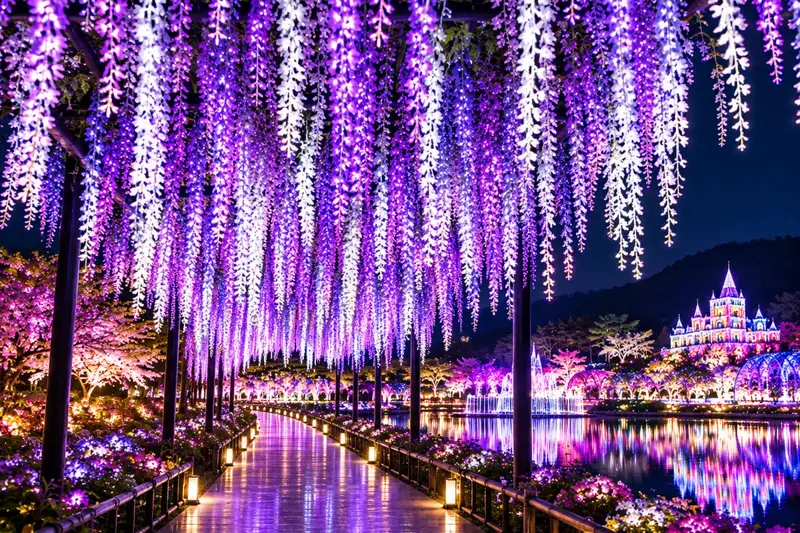 from $311 per group
One price for up to 6
From Tokyo/Yokohama: Ashikaga Flower Park Illumination Tour
Japan's best-known light show is two hours out of Tokyo in Tochigi, and the trains back are slow after dark. This private car takes up to six people for one price, with about three hours in the park. Wheelchair accessible.
Check Availability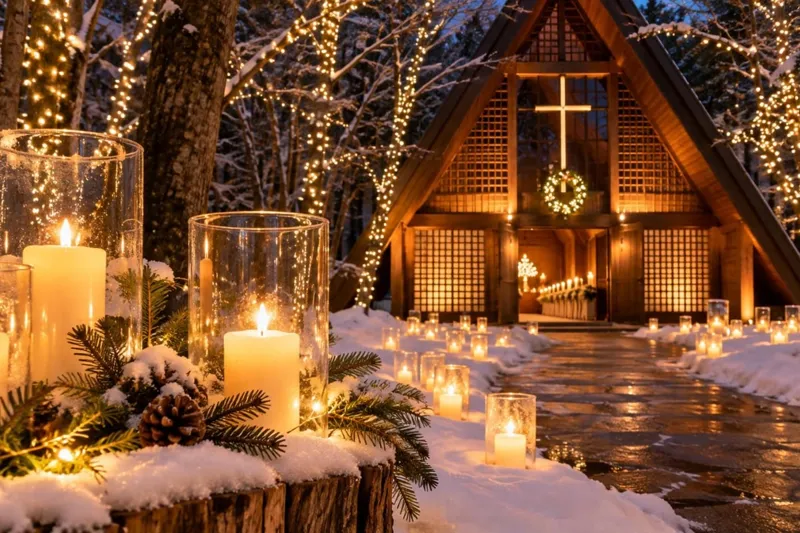 from $76
Christmas in the mountains
From Tokyo: Karuizawa Christmas Village & Outlet Day Trip
A mountain resort town that has kept Christmas since its missionary days: Kyu-Karuizawa Ginza, the wooden churches, Harunire Terrace along a forest stream and two hours at Prince Shopping Plaza as its winter lights come on. About 2.5 hours each way.
Check AvailabilityPrices, ratings and details are the platform's own. Dollar figures are the listed prices. The platform bills in your account's currency.
Tokyo Christmas Market Dates, Hours and Tickets
The market has left Hibiya Park and Meiji Jingu Gaien, so older guides send you to the wrong station. This season it runs at two venues on two separate train lines, and entry is paid at both.
The two venues open on different days and close at different times. Dates, opening hours, last entry and stations below come from each venue's own page on the organiser's site.
| Venue | Dates | Hours | Last entry | Nearest station |
|---|---|---|---|---|
| Shin-Toyosu | November 20 to December 25 | 11:00-21:30 (16:00 start on November 20) | 20:30, last orders 21:00 | Shin-Toyosu (Yurikamome), 2 minutes |
| Shiba Park | December 4 to December 25 | 11:00-22:00 (16:00 start on December 4) | 21:00, last orders 21:30 | Onarimon exit A6 (Toei Mita Line), 1 minute |
What a Ticket Costs
Entry is the same price at both venues and depends on the day, not the venue. The organiser's ticket announcement sets three day bands, and the top band falls on December 24 and 25, which are ordinary working days in Japan. Adults means junior high school age and up.
| Ticket | Weekdays | Weekends and holidays | December 24-25 |
|---|---|---|---|
| Adult | $6.32 (¥1,000) | $9.48 (¥1,500) | $12.64 (¥2,000) |
| Elementary school child | $3.16 (¥500) | $3.16 (¥500) | $6.32 (¥1,000) |
| Preschool child | Free | Free | Free |
Advance Tickets, the Mug and Same-Day Entry
Advance tickets have been on sale since October 1 through KKday and FamilyMart, and an adult advance ticket comes with the venue's own mug at no extra cost. Shin-Toyosu's mug is ultramarine and Shiba Park's is red, and the two together form a pyramid design. An advance ticket costs exactly what the gate charges, so there is no reason to wait.
Each ticket names a 30-minute entry slot. The slot works as a guide rather than a hard cut-off: a late arrival is still let in, but holders of the current slot go through the gate first. Same-day tickets are sold at a separate entrance until the day's quota runs out, and they do not include the mug.
On busy evenings the organiser may restrict walk-in entry, and late December evenings sell out first. If your evening is fixed, book the slot.
Deposit Cups, Re-entry, Dogs and Cards
Drinks bought without your own mug carry a cup deposit, paid at the stall. You receive a coin with the stall number, and you drop it in the coin box inside the venue to get the deposit back. Keep the cup and the deposit stays with the stall, so bring the advance-ticket mug if you have one.
Re-entry is allowed, though the organiser asks visitors to keep a visit to about three hours. Dogs are welcome on a leash everywhere except the tent in front of the stage. Cards and other cashless payments work at every food and goods stall, and cash is fine too.
Children are welcome but need to stay close, because the lanes get crowded.
Source: Tokyo Christmas Market, Shin-Toyosu, Tokyo Christmas Market, Shiba Park, ticket announcement, visitor Q&A.
Shin-Toyosu or Shiba Park: Which Venue to Pick
Pick Shin-Toyosu if you are in Tokyo before December 4 or are spending the day around the bay. Pick Shiba Park for the later opening hour and Tokyo Tower overhead.
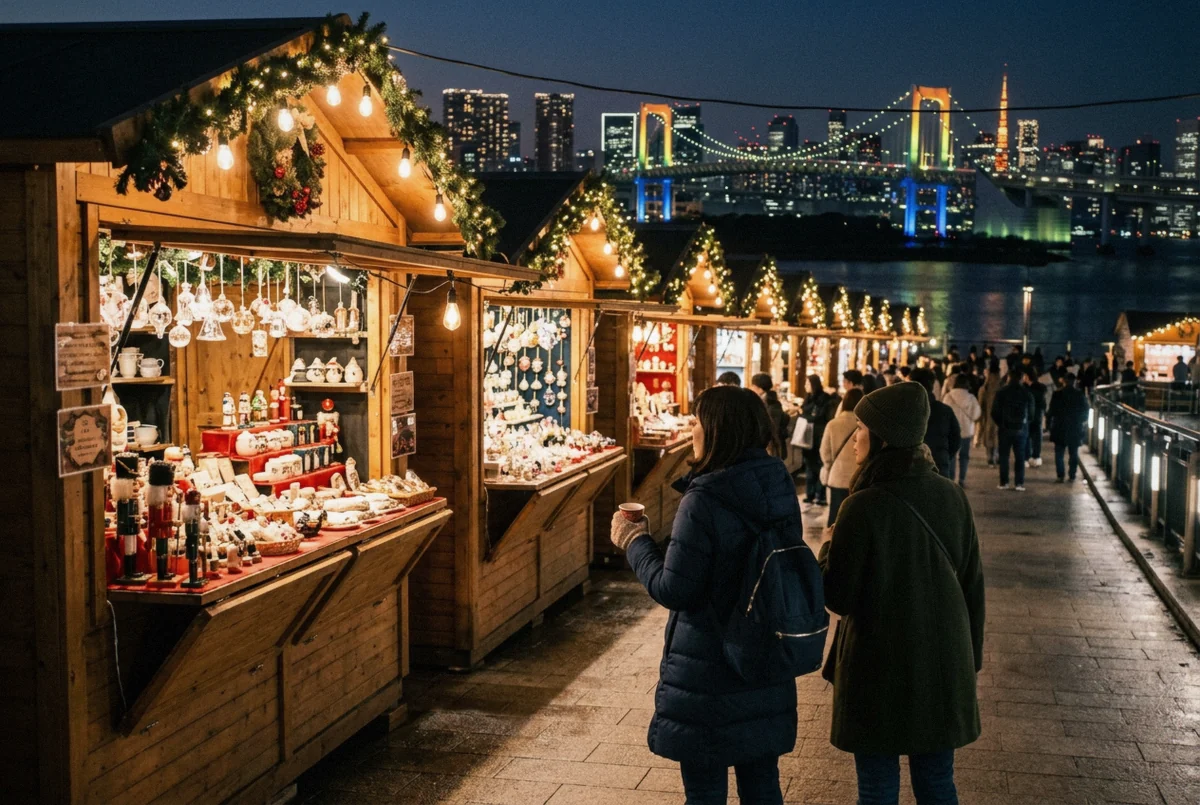
Shin-Toyosu sits on the bay, two minutes from its Yurikamome station.
Shin-Toyosu, on Tokyo Bay
Shin-Toyosu is the longer run, 36 days from November 20, and the first year the market has used this waterfront site in Koto-ku. The gate is 2 minutes on foot from Shin-Toyosu Station and 3 minutes from Shijo-mae, both on the Yurikamome. Toyosu Station on the Yurakucho Line is a 15-minute walk.
There is no car or bicycle parking. The Yurikamome is the line to Odaiba, so the natural day is the Toyosu fish market in the morning, Odaiba in the afternoon and the market after dark, all without changing lines.
Shiba Park, Under Tokyo Tower
Shiba Park opens later, on December 4, and stays open an hour longer each night, to 22:00 with last entry at 21:00. The site is the Shiba Park No. 4 lot, one minute from exit A6 of Onarimon Station on the Toei Mita Line. Kamiyacho and Daimon stations are about 10 minutes on foot, and JR Hamamatsucho about 12.
Again, no parking. Tokyo Tower stands right behind the huts, so an evening here pairs with a Tokyo Tower ticket before or after. Zojoji temple is next door, which matters on New Year's Eve.
The Pyramid, the Choir and the Programme
The centrepiece is a Christmas pyramid about 14 m tall, built in the Dresden tradition, with tiers of carved figures and turning blades on top. The programme adds live performances by a choir that travels from Germany, workshops, meal plans in VIP domes and an afternoon tea. Those extras are booked and paid separately from entry.
If you only want the huts, the pyramid and a mug of hot wine, the basic ticket covers it.
Source: Tokyo Christmas Market, Shin-Toyosu, Tokyo Christmas Market, Shiba Park, Tokyo Christmas Market.
Other Christmas Markets in Tokyo
The Tokyo Christmas Market is the biggest, but it is not the only one, and most of the others charge nothing to walk in.
Five markets compared by place, dates and entry. Figures come from each organiser's own announcement: Mori Building for the two Hills markets, Skytree Town's event listing and the Red Brick Warehouse release.
| Market | Where | Dates | Entry |
|---|---|---|---|
| Tokyo Christmas Market | Shin-Toyosu and Shiba Park | November 20 to December 25 | from $6.32 (¥1,000) |
| Roppongi Hills Christmas Market | Ohya Plaza, Roppongi Hills | November 21 to December 25 | Free |
| Azabudai Hills Christmas Market | Central plaza, Azabudai Hills | November 21 to December 25 | Free |
| Skytree Town Christmas market | Sky Arena, 4F, Tokyo Skytree Town | November 5 to December 25 | Free |
| Yokohama Red Brick Warehouse | Event Plaza, Yokohama | November 20 to December 25 | from $3.16 (¥500) |
Roppongi Hills and Azabudai Hills
The Roppongi Hills market is in its 20th edition on Ohya Plaza, with about 10 German-style stalls selling gluhwein, sausages, stollen and Kathe Wohlfahrt ornaments, 11:00-21:00. Azabudai Hills sets 19 shops, four for goods and 15 for food, on its central plaza behind a lit arch gate, also 11:00-21:00. Both are free to enter.
Mori Building runs a stamp rally across its five Hills until December 25: spend $6.32 (¥1,000) or more on one receipt for a stamp, and stamps from three different Hills earn a $6.32 (¥1,000) coupon. You need the free Hills app to collect them.
Tokyo Skytree Town
Skytree Town's market sits on Sky Arena on the 4th floor, 11:00-22:00 with last orders at 21:00, under an 8 m tree. Entry and the lights are free. The illumination runs 16:00-23:00, and a lighting show on the tower changes theme about every 15 minutes from 17:30 to 22:00, until 24:00 on December 24 and 25.
Concerts on the observation deck need a deck ticket, covered on Tokyo Skytree.
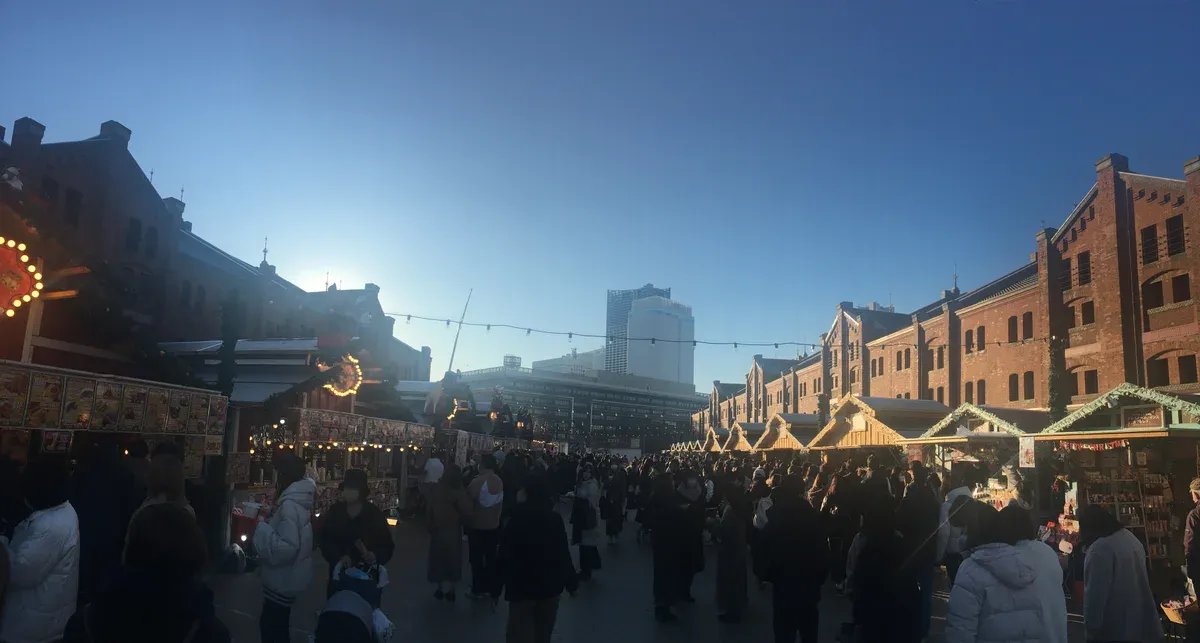
The market fills the plaza between the two brick warehouses. Photo: Nesnad, CC BY 4.0, via Wikimedia Commons
Yokohama Red Brick Warehouse
Yokohama's market runs November 20 to December 25 between two old customs warehouses on the harbour, with about 60 booths around an 11 m live fir lit with about 20,000 LEDs. A five-minute light show plays every 15 minutes. Entry starts at $3.16 (¥500) and varies by day, and tickets went on sale on November 6.
Hours are 11:00-21:00 until December 4 and 11:00-22:00 from December 5. The Christmas Village in the park next door is free. For an evening without train planning, the Yokohama Christmas market evening tour at $99 includes the entry ticket and hotel pickup.
The rest of the city is on Yokohama.
Source: Mori Building, Christmas Hills, Mori Building, Hills markets, Tokyo Skytree Town listing, Red Brick Warehouse release.
Tokyo Christmas Lights: Where and When
Almost every big illumination in central Tokyo is free and switches on between 16:00 and 17:00, shortly after the December sunset. The difference is the end date: some go dark on December 25, others run into February.
Six central illuminations compared by dates, hours and cost, from each operator's own announcement. Marunouchi has not published this season's dates, so its row shows last season's run as a guide.
| Illumination | Dates | Hours | Entry |
|---|---|---|---|
| Roppongi Keyakizaka | November 5 to December 25 | 17:00-22:00 | Free |
| Tokyo Midtown | November 26 to December 25, path to February 23 | 17:00-23:00 | Free |
| HIBIYA Magic Time | November 12 to February 28 | 16:00-23:00 | Free |
| Shinjuku Minamillumi | November 11 to February 14 | From 16:30 in December | Free |
| Tokyo Dome City | November 19 to February 28 | 17:00-24:00 | Free |
| Marunouchi (last season) | November 13 to February 15 | 16:00-23:00, to 24:00 in December | Free |
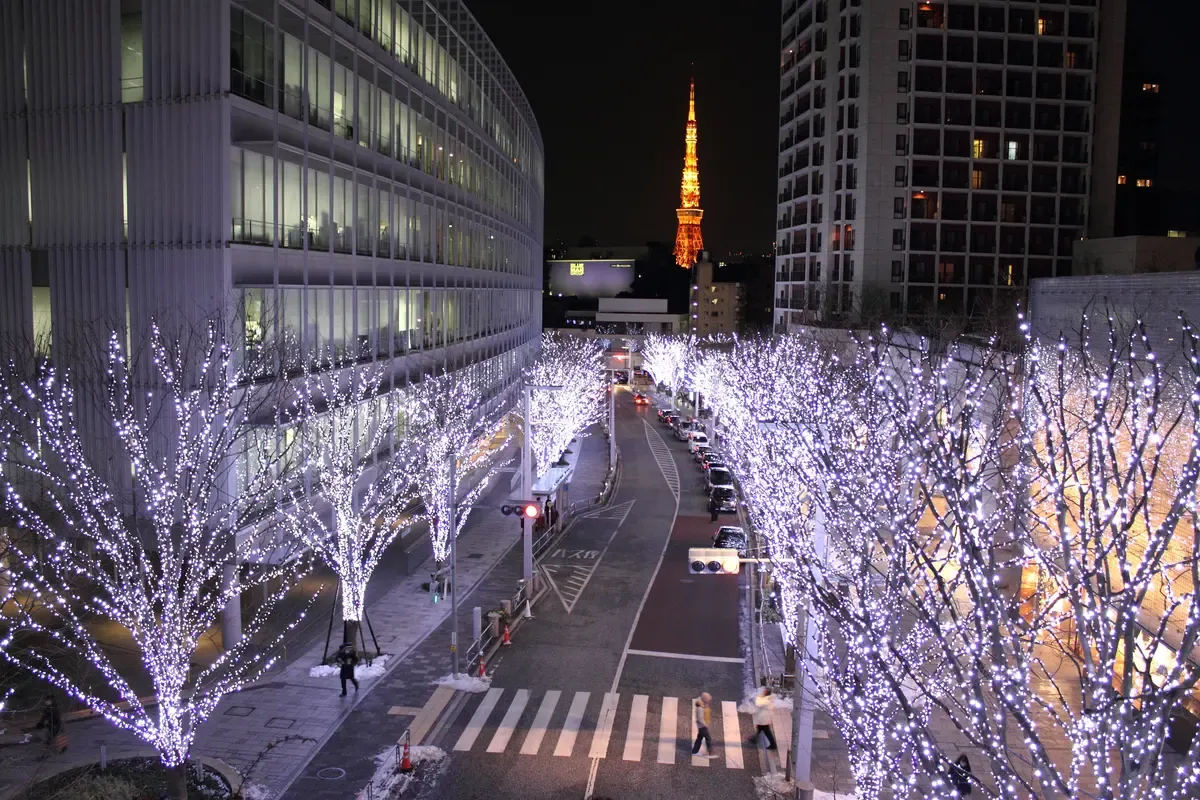
Keyakizaka from the top of the slope, Tokyo Tower at the far end. Photo: Kakidai, CC BY-SA 3.0, via Wikimedia Commons
Roppongi Keyakizaka
Keyakizaka is the avenue that runs down from Roppongi Hills, and this season's theme is SNOW & BLUE: about 970,000 LEDs over roughly 400 m of zelkova trees, 17:00-22:00 until December 25. Stand at the top of the slope and Tokyo Tower closes the view at the bottom. Roppongi Hills also lights 66 Plaza until December 27 and Mori Garden until December 25, and the Christmas market on Ohya Plaza is a few minutes away, so one evening covers all of it.
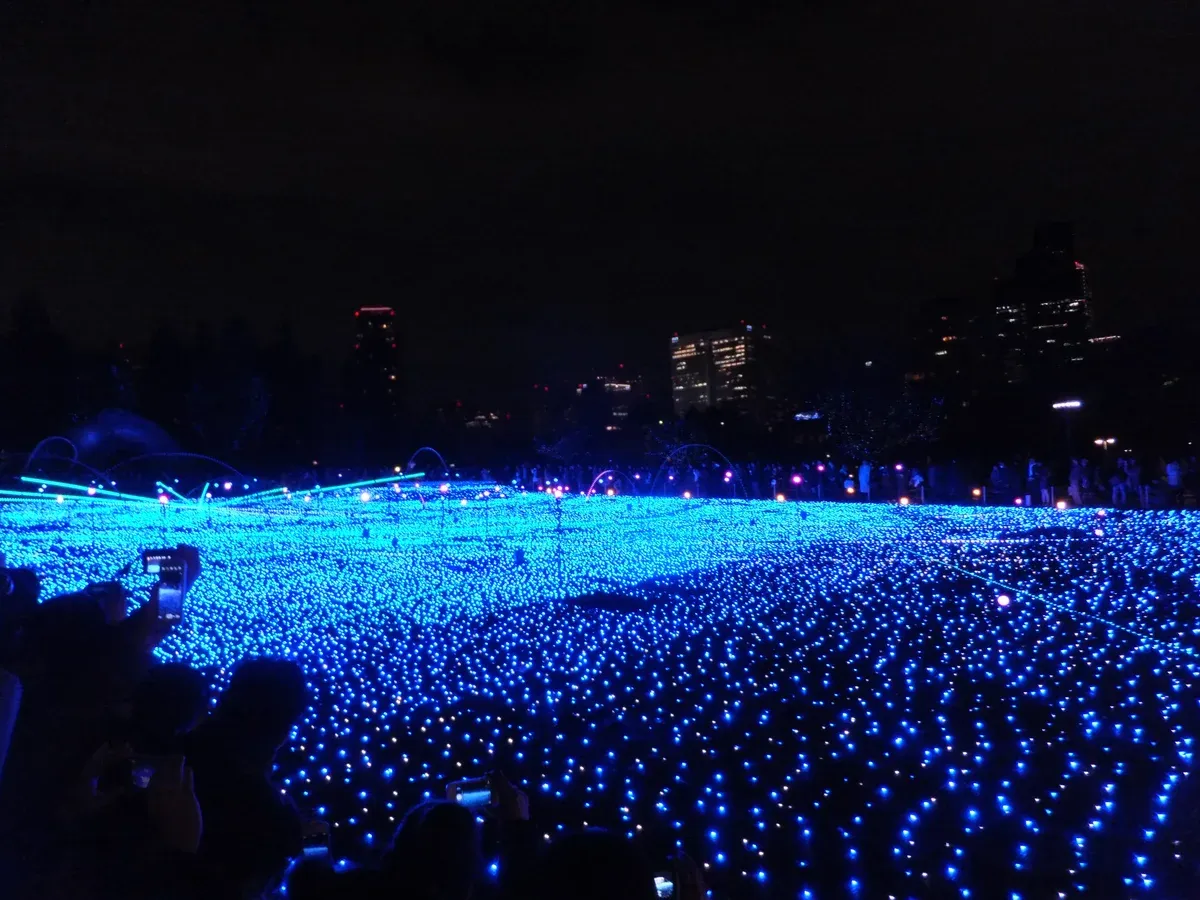
The lawn of Midtown Garden lit blue in an earlier winter. Photo: 掬茶, CC BY-SA 3.0, via Wikimedia Commons
Tokyo Midtown
Tokyo Midtown has renamed its show. This season it is Midtown Christmas, November 26 to December 25, and the lawn of Midtown Garden plays MIDWINTER LIGHTS, a free four-minute light and sound show with bubbles, 17:00-23:00. The bubbles stop after December 20.
The Path of Light, about 340,000 bulbs, stays on until February 23. The ice rink opens December 5 at $12.64 (¥2,000) for adults, $14.54 (¥2,300) from December 12 to January 3, children $8.85 (¥1,400) or $10.74 (¥1,700), shoe rental $3.16 (¥500), and it closes on January 1. The whole complex is shut November 21 to 23 and closes at 14:00 on November 20.
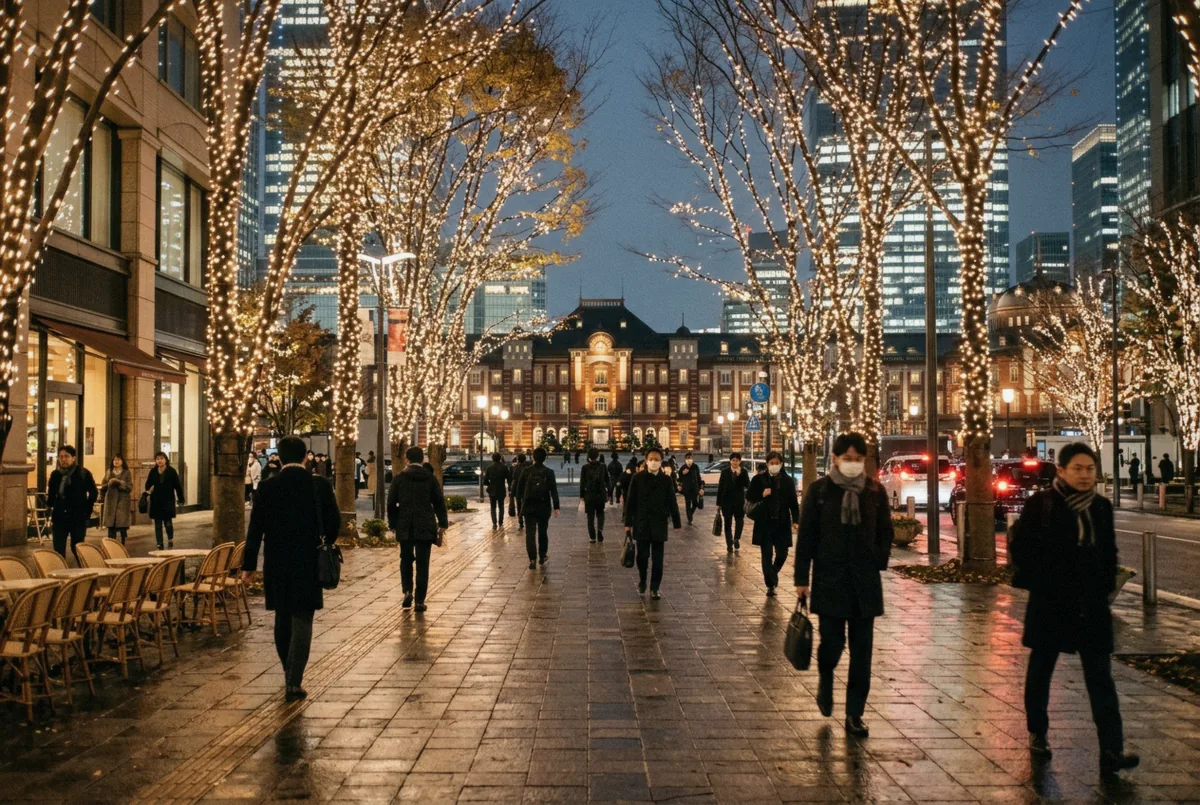
Naka-dori and Gyoko-dori lead straight to the red brick front of Tokyo Station.
Marunouchi and Hibiya
Marunouchi has not announced this season yet. Last season about 775,000 champagne-gold LEDs lit roughly 250 trees along the 1.2 km of Naka-dori from November to February 15, 16:00-23:00 and until 24:00 in December, and Gyoko-dori added 36,000 bulbs on the axis from Tokyo Station toward the Imperial Palace. A few blocks south, HIBIYA Magic Time at Tokyo Midtown Hibiya runs November 12 to February 28, 16:00-23:00, with an 8 m tree on the Step Plaza until December 25 and a winter garden on the 6th floor. The Marunouchi lights night walk at $38 covers the palace moat, the lit station and the KITTE rooftop in 90 minutes.
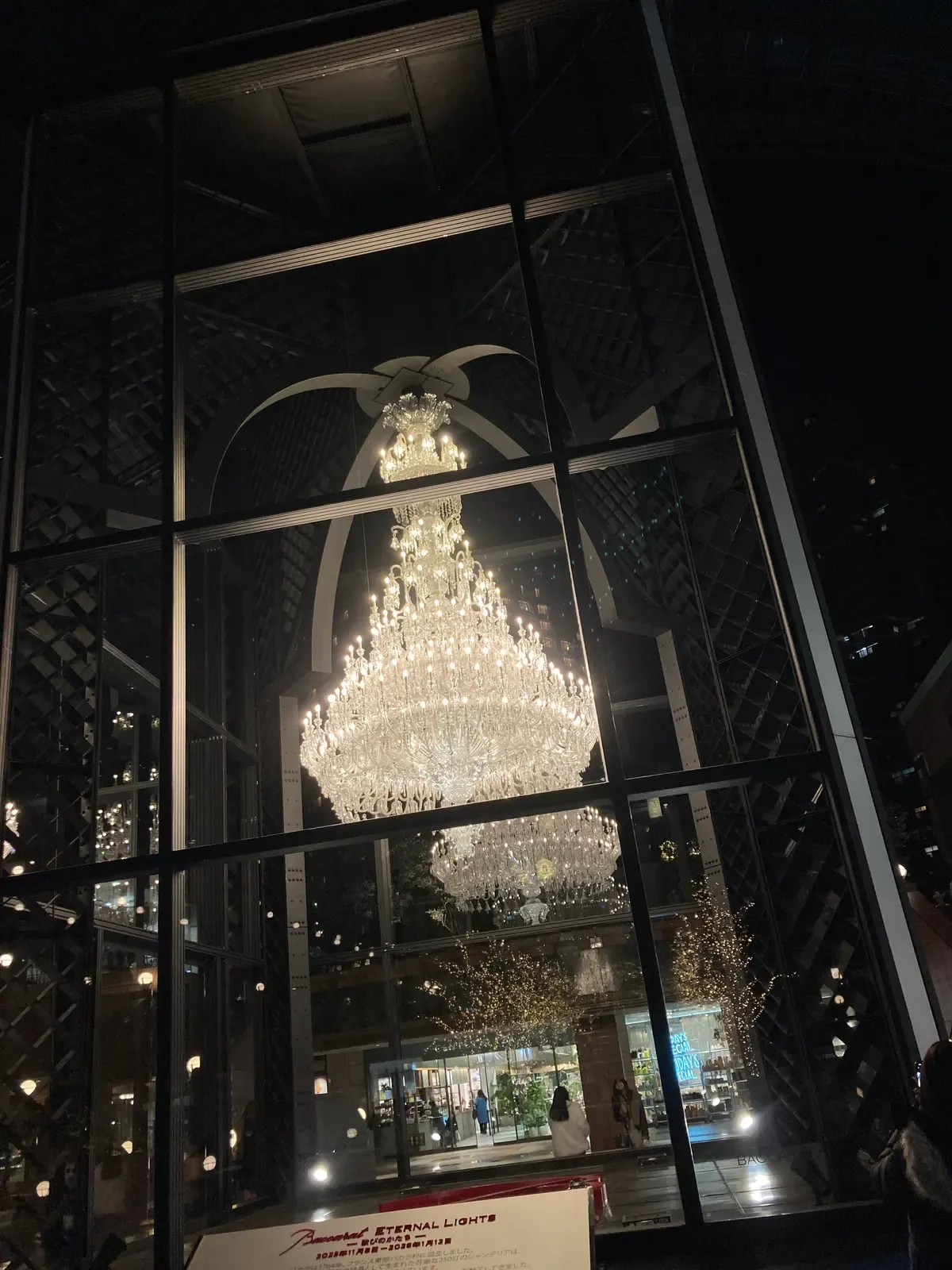
The Baccarat chandelier in Center Plaza at Yebisu Garden Place. Photo: Wadakuramon, CC0, via Wikimedia Commons
The Baccarat Chandelier at Yebisu Garden Place
Yebisu Garden Place hangs a Baccarat crystal chandelier in Center Plaza every winter. Last season it was about 5 m tall and 3 m wide, with 8,500 crystal pieces and 250 lights, lit 11:00-23:00 from early November to mid January. Its official dates for this season are not out yet.
It is free and the plaza is small, so after dark expect to queue for a clear photo.
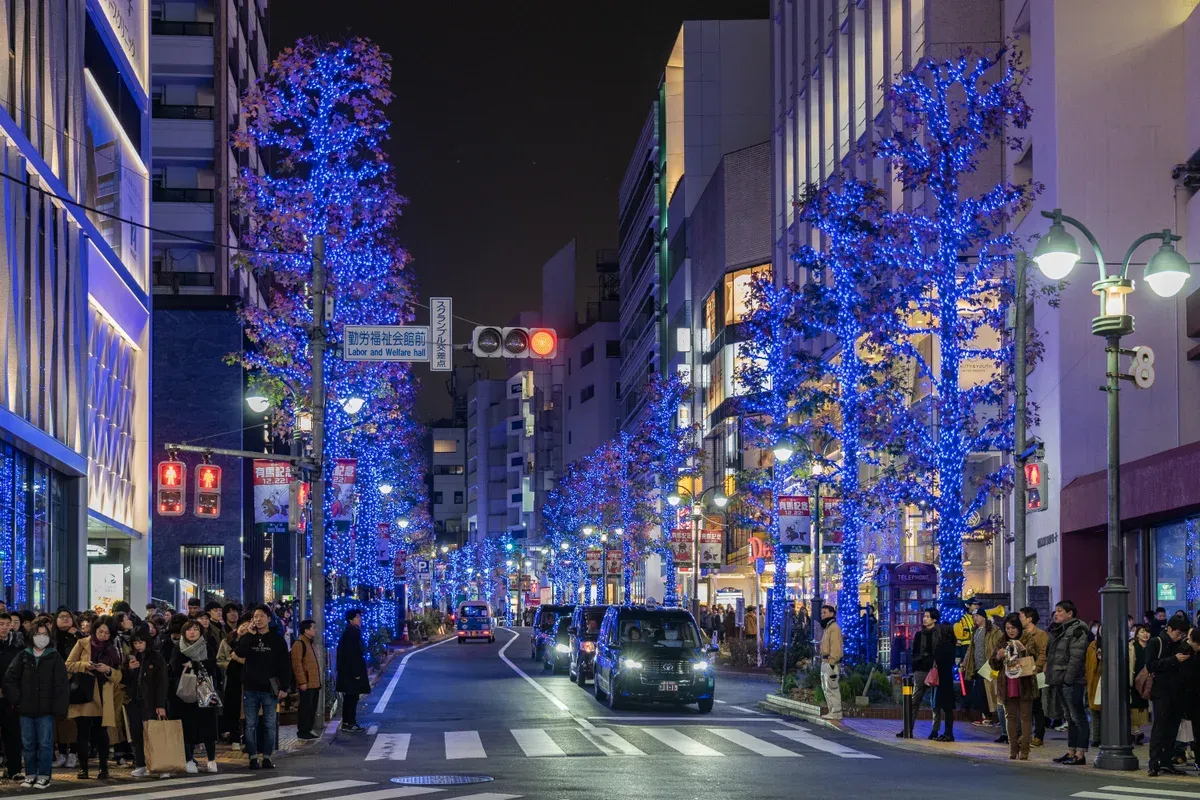
Ao no Dokutsu fills the avenue with blue light and people. Photo: Wei-Te Wong from Taipei City, Taiwan, Republic of China, CC BY-SA 2.0, via Wikimedia Commons
Ao no Dokutsu, the Shibuya Blue Cave
The Blue Cave turns about 900 m of trees from Shibuya Park Street to the zelkova avenue of Yoyogi Park entirely blue. Last season it ran December 4 to 25, 17:00-22:00, free, and drew over 350,000 visitors. This season's dates have not been announced.
It is the most crowded light-up in the city, so go on a weekday. The Blue Cave evening drive at $76 runs only on the Blue Cave dates and adds Omotesando and Yebisu. The district itself is on Shibuya.
Seeing Several in One Evening
The displays are spread across four districts, and the evening trains between them are full. The Roppongi and Marunouchi Christmas lights van tour at $90 picks you up from your hotel and stops for about 45 minutes each at Keyakizaka, Tokyo Midtown, Yebisu Garden Place and Marunouchi before Tokyo Station. For a slower evening on foot with someone who lives here, the private winter illuminations walk with a local at $81 is planned around your interests and includes a hot drink. Year-round options are on Tokyo tours.
Source: Mori Building, Keyakizaka, Midtown Christmas, Suntory Museum notice, Marunouchi Illumination, HIBIYA Magic Time, Yebisu Garden Place, Ao no Dokutsu, Minamillumi, Tokyo Dome City.
Bigger Light Shows Outside Central Tokyo
The largest displays are in parks outside the 23 wards. They charge entry and take a whole evening, but they are bigger than anything in the city centre.
Five light shows within reach of Tokyo, compared by run, adult entry and how you get there. Dates and prices come from each park's announcement for this season.
| Light show | Dates | Adult entry | Getting there |
|---|---|---|---|
| Ashikaga Flower Park | October 17 to February 14, closed December 31 | $9.48 (¥1,500) | About 2 hours by car |
| Sagamiko Illumillion | November 14 to May 9 | $12.64 (¥2,000), $15.17 (¥2,400) at peak | Sagamiko, Kanagawa |
| Yomiuriland Jewellumination | October 29 to April 4 | $11.38 (¥1,800) park entry | Inagi, west Tokyo |
| Tokyo Mega Illumi | October 31 to January 10, final season | Dynamic pricing | Oi-keibajo-mae, 2 minutes |
| Enoshima | Late November to February | Included on the tour below | About 1 hour by van |
Ashikaga, Sagamiko and the Racecourse
Ashikaga Flower Park in Tochigi is the best known, with a new 21 m Christmas tree for its 25th year and lights on from about 16:30. Children pay $5.06 (¥800). Sagamiko Illumillion, with about 6 million bulbs, is the largest in the Kanto region and opens daily until January 3.
Tokyo Mega Illumi at Oi Racecourse is the easiest by train, but this is its final season, and it closes on racing days, December 26 and 27 and January 1. Yomiuriland stays lit until April and charges $19.59 (¥3,100) for an after-15:00 pass with rides.
Booking One as a Day Trip
The trains back from Ashikaga are slow after dark, so the Ashikaga Flower Park illumination tour at $311 for a private car for up to six people is the simple version, with about three hours in the park. The Enoshima winter lights trip at $112 pairs a Kamakura afternoon with the lit Samuel Cocking Garden and the Sea Candle tower, both tickets included. For a different kind of Christmas, the Karuizawa Christmas day trip at $76 visits the candle-lit churches of a mountain resort town. More ideas are on day trips from Tokyo, and the island itself on Enoshima.
Source: Ashikaga Flower Fantasy, Sagamiko Illumillion, Yomiuriland Jewellumination, Tokyo Mega Illumi.
Christmas in Tokyo: What to Expect
Tokyo is a good place to spend Christmas if you want lights, markets and food rather than a day off. The city treats it as a season, not a holiday.
December 24 and 25 Are Working Days
Neither Christmas Eve nor Christmas Day is a national holiday in Japan. Shops, restaurants, museums and sights keep normal hours, and offices work. That cuts both ways.
Everything is open, but the markets charge their top price on both days and the light-ups draw their biggest crowds. Skytree Town keeps its tower lighting show running until 24:00 on December 24 and 25. Most markets and most of the light-ups end on the 25th, so treat December 26 as the start of the New Year season.
KFC, Christmas Cake and Who Celebrates
Fried chicken from KFC has been a Christmas meal in Japan since a 1974 advertising campaign, and December 24 is the chain's busiest day of the year. Orders open around November 1 through the app, often with a Japanese phone number, and walk-in queues on the 24th and 25th can run for hours. Dessert is the Christmas cake, a strawberry shortcake sold by every bakery and department store.
Christmas Eve is often described as a night for couples, but in surveys most people spend Christmas with family, and many simply stay home. Restaurants and hotel dinners still book up about a month ahead. More on food is on where to eat in Tokyo.
Weather and Daylight
December in Tokyo is cold and dry. The long-term average high is 12.0 C and the low 3.8 C, with 57.9 mm of rain over the month. The sun sets between 16:27 and 16:37, which is why the light-ups start so early.
A warm coat, gloves and comfortable shoes are enough. Month by month figures are on best time to visit Tokyo, and a room near a station on the Yamanote line keeps the evenings short: see where to stay in Tokyo.
Source: Cabinet Office, national holidays, Japan Meteorological Agency normals, sunset times, KFC Christmas in Japan, Christmas cake survey.
New Year's Eve in Tokyo
New Year's Eve in Tokyo is temple bells and shrine queues, not street parties. Plan it around three things: which bell you can ring, which shrine you want at midnight and which train gets you home.
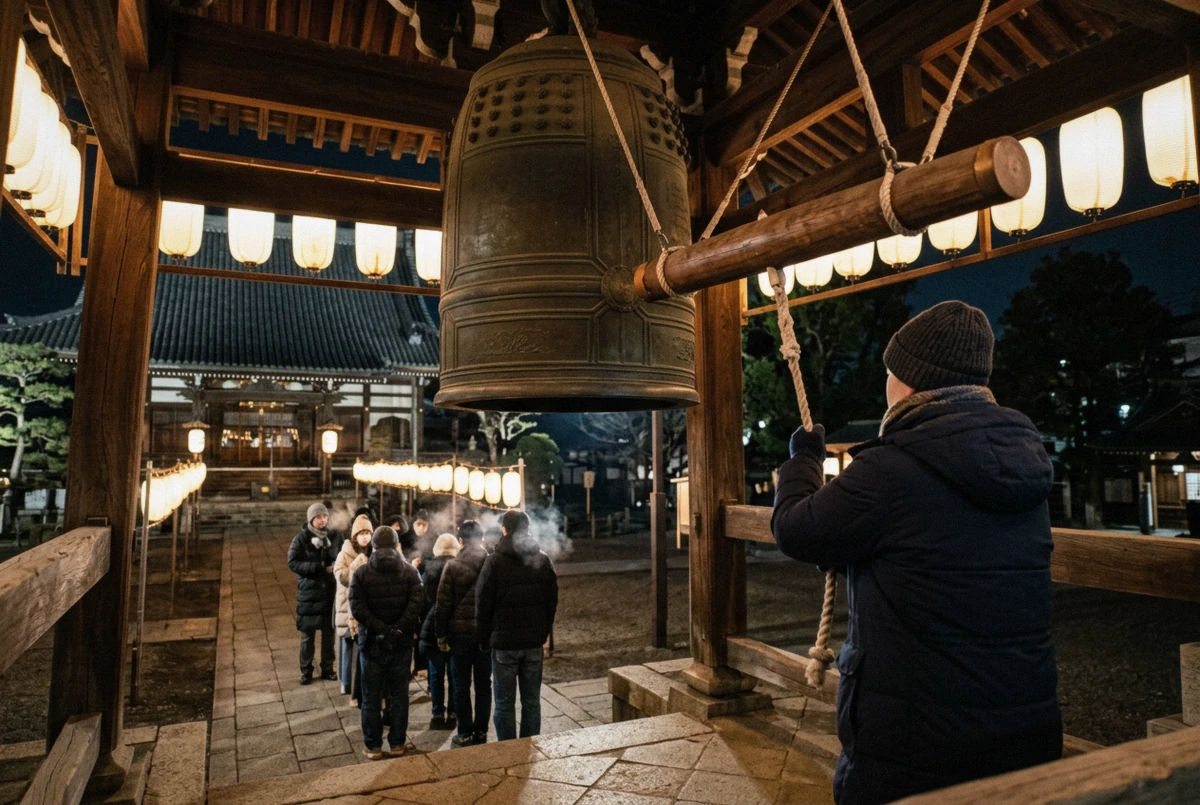
Joya no kane: 108 strikes of a temple bell to see out the old year.
Ring the Bell at Zojoji
Zojoji, the temple beside Tokyo Tower, has moved its New Year bell because of crowding on the grounds. The ceremony starts at 21:30 on December 31, the first of the 108 strikes rings at 21:45, and it ends at about 23:00. The bell no longer rings at midnight.
Visitors can ring it themselves with a ticket, sold from 9:00 on December 1 at the temple office on the second floor of the hall. Last season it cost a $12.64 (¥2,000) donation including a keepsake, one person per ticket, with groups of four sharing each strike, and numbers are limited. Onarimon Station is about 3 minutes away, the same station as the Shiba Park market.
A purification fire ceremony starts at 20:00, and a New Year service runs in the main hall from midnight. Ring at Zojoji and you still have an hour to reach a shrine before the year turns.
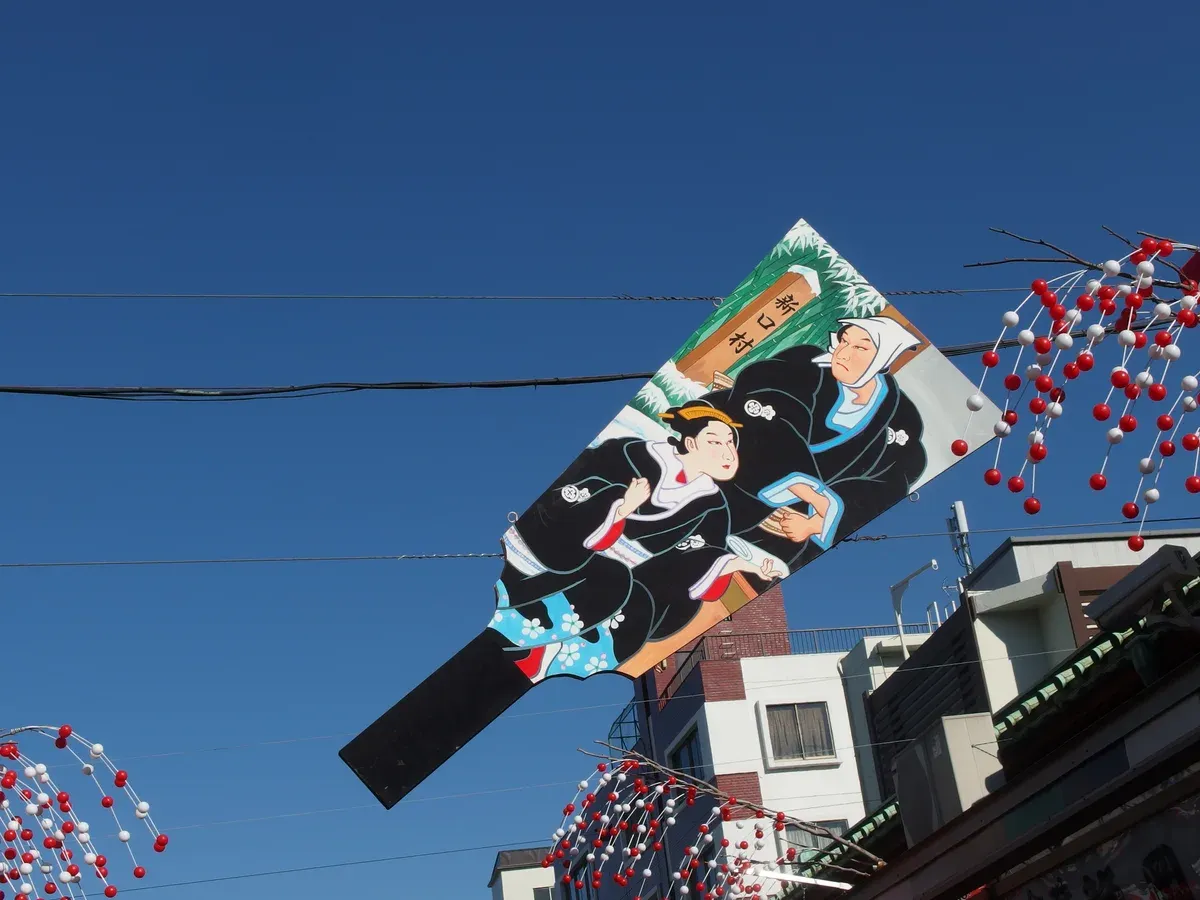
New Year decorations at Senso-ji in Asakusa. Photo: Guilhem Vellut from Annecy, France, CC BY 2.0, via Wikimedia Commons
Shibuya, Senso-ji and the Countdowns That Are Not
Shibuya has cancelled its official countdown six times in a row. Drinking in the street around the station is banned from 18:00 to 05:00, the Hachiko statue is fenced off from 06:00 on December 31 to 01:00 on January 1, and convenience stores stop selling alcohol. The square around Shibuya Crossing has no stage and no official event.
At Senso-ji the midnight bell on Bentenyama is rung by local parishioner groups only, and the public cannot join. The temple's busiest hours are 00:00 to 03:00 on January 1. Last season the Tokyo Metropolitan Government held a free countdown in the Citizens' Plaza of its Shinjuku building, 21:30 to 00:10.
This season's plan has not been announced.
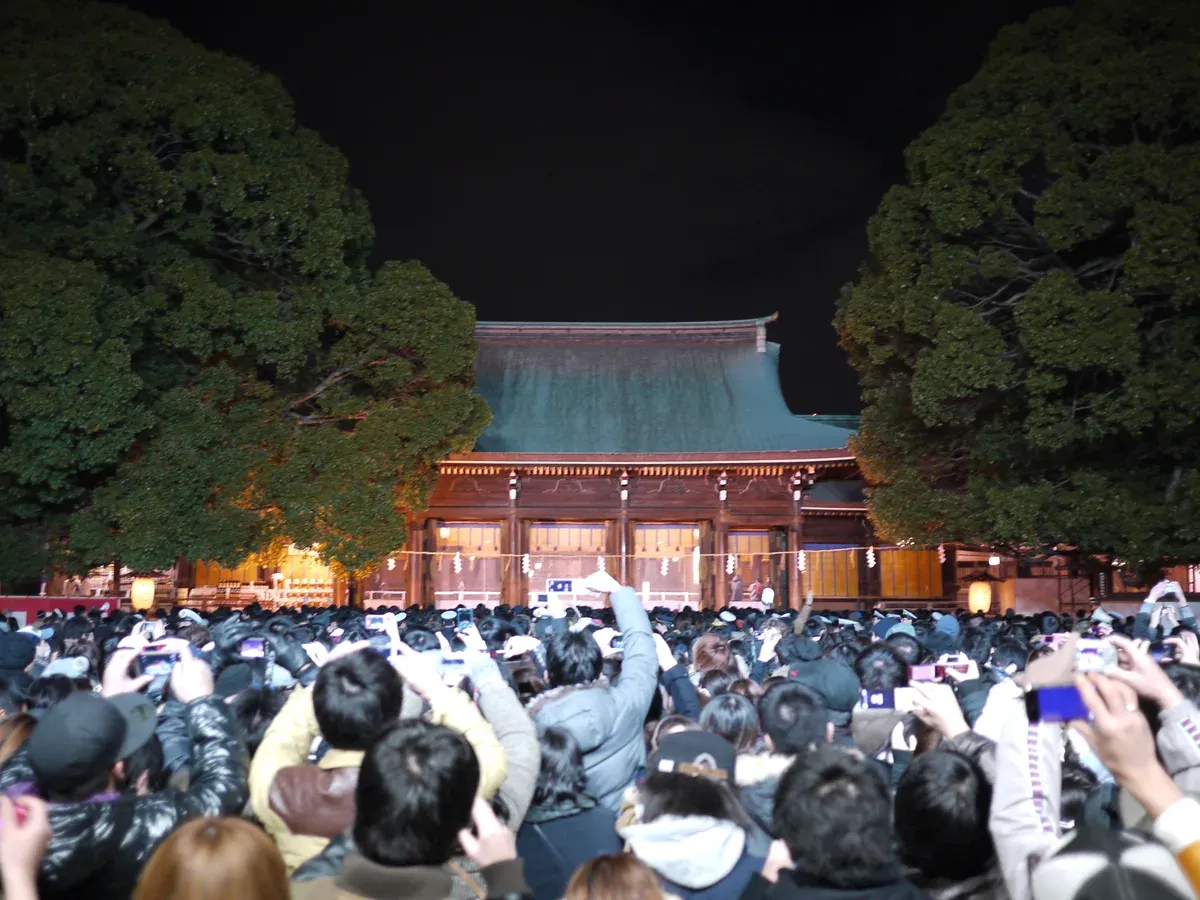
Midnight in front of the main hall at Meiji Jingu. Photo: Yoshikazu Takada, CC BY 2.0, via Wikimedia Commons
Hatsumode at Meiji Jingu
Hatsumode is the first shrine visit of the year, and Meiji Jingu draws about 3 million people in the first three days. It is the one big shrine that stays open through the night of December 31, while its normal December hours are 06:40 to 16:00. The peak runs from 22:00 on December 31 to 03:00 on January 1, and police close the roads around Harajuku Station from 21:00.
Expect a slow walk in a guided crowd to the main hall. The shrine and its approach are on Meiji Jingu. If you would rather go by day, the New Year hatsumode and lucky bags tour at $76 runs January 1 to 7 and pairs a shrine visit with the lucky-bag sales.
Which trains run through the night of December 31, by operator. The pattern below is last season's, from the operators' announcements, so check the new timetables before you plan around one.
| Operator | All night on December 31? | Lines |
|---|---|---|
| JR East | Yes | Yamanote, Keihin-Tohoku, Chuo-Sobu Local, Chuo Rapid, Yokosuka, Sobu |
| Keio | Yes | Shinjuku to Takaosanguchi |
| Keisei | Yes | Ueno to Narita, Oshiage to Kanamachi |
| Tokyo Metro | No | Normal last trains, holiday timetable December 30 to January 3 |
| Toei Subway | No | Normal last trains |
In practice the Yamanote line is the one that matters. Harajuku for Meiji Jingu is on it, and so is Hamamatsucho, about 12 minutes on foot from the Shiba Park market beside Zojoji. Onarimon is on the Toei Mita Line, which does not run all night, so walk to Hamamatsucho after the bell.
Tokyu, Odakyu, Tobu, Seibu, Keikyu, the monorail and the Yurikamome do not run overnight. How the network fits together is on getting around Tokyo.
Source: Zojoji notice, Zojoji New Year page, Time Out Tokyo, Shibuya, Weathernews, Meiji Jingu, Meiji Jingu, Weathernews, Senso-ji, Tetsudo Channel, New Year trains, Happy New Year Tokyo.
New Year's Day and January 2
January 1 is quiet: the shrines are full and much of the rest of the city is shut. January 2 is the opposite, with the sales and the palace greeting.
What Closes and What Opens
January 1 is the only national holiday in the New Year week, but most offices close from January 1 to 3. Most department stores close on January 1 and reopen on January 2 with fukubukuro, sealed lucky bags of goods worth more than the price, and some now start the sales on January 3. The bags sell out early, so go to the Ginza stores at opening time.
The Toyosu fish market closes on national holidays and for its year-end break, so check its calendar. Museums usually close around December 28 to January 1, and the museums page has each one's hours. Temples, shrines and the free light-ups stay open.
First Sunrise and the Palace Greeting
The first sunrise of the year comes at about 06:50 in Tokyo. Skytree and Tokyo Tower have opened their decks early for it in past years for a limited number of visitors, and neither has announced this season's plan. On January 2 the Emperor greets the public from the balcony of the Chowa-den in the Imperial Palace.
Last season entry ran 09:30 to 14:10 through the Main Gate only, with five appearances at about 10:10, 11:00, 11:50, 13:30 and 14:20, and about 60,000 people attended. Bags are inspected at the gate, so leave large luggage in a station locker. Flagpoles, animals other than guide dogs and drones are not allowed, the courtyard is gravel, and visitors are asked to stay for one appearance only.
The East Gardens are closed to ordinary visits that day.
Source: Imperial Household Agency, New Year greeting, Cabinet Office, national holidays, LIVE JAPAN, New Year sales, first sunrise.
Tokyo Christmas Market and New Year Dos and Don'ts
Ten habits that save time, money and a cold wait in December.
Do
- Buy the market ticket ahead, because the adult advance ticket includes the mug at the gate price.
- Return the stall coin to the coin box before you leave, or the cup deposit stays with the stall.
- See the light-ups on a weekday before December 20, when the Midtown bubbles still run and the crowds are thinner.
- Buy the Zojoji bell ticket at the temple office on December 1 if you want to ring it yourself.
- Plan the ride home on December 31 around JR, Keio or Keisei, the only lines that run all night.
Don't
- Don't go to Hibiya Park or Meiji Jingu Gaien for the Tokyo Christmas Market, because it has moved to Shin-Toyosu and Shiba Park.
- Don't pick December 24 or 25 for a cheap visit, because both are top-price days.
- Don't wait at Zojoji for a midnight bell, because it now ends at about 23:00.
- Don't plan a drink in the street in Shibuya on New Year's Eve, because it is banned from 18:00 to 05:00.
- Don't plan museums for January 1, because most are closed for the New Year break.
Tokyo Christmas Market: Questions
Is there a Christmas market in Tokyo?
Yes, several. The biggest, the Tokyo Christmas Market, runs at Shin-Toyosu from November 20 and at Shiba Park from December 4, both until December 25, with paid entry. Roppongi Hills, Azabudai Hills and Tokyo Skytree Town run smaller markets with free entry, and Yokohama's Red Brick Warehouse market is a short trip away. The full comparison is in other Christmas markets in Tokyo.
Which is the best Christmas market in Tokyo?
For the full German-style evening with the 14 m pyramid, the Tokyo Christmas Market. Pick Shiba Park for Tokyo Tower overhead and the later closing time, or Shin-Toyosu for the longer run from November 20. For a free browse, Roppongi Hills pairs its market with the Keyakizaka lights. Outside the city, Yokohama's market is the most atmospheric. Which venue to pick compares the two main sites.
Do you need tickets for the Tokyo Christmas Market?
Yes. Adults pay $6.32 (¥1,000) on weekdays, $9.48 (¥1,500) at weekends and $12.64 (¥2,000) on December 24 and 25, and preschool children enter free. Advance tickets cost the same, carry a 30-minute entry slot and include the mug. Same-day tickets are sold at a separate entrance until the quota runs out, without the mug. Details are in dates, hours and tickets.
Can I leave the Tokyo Christmas Market and come back, or bring my dog?
Re-entry is allowed, and the organiser asks visitors to keep a visit to about three hours. Dogs are welcome on a leash everywhere except the tent in front of the stage. Cards and other cashless payments work at every stall. If you buy a drink without your own mug, keep the stall coin to get the cup deposit back. The rules are in deposit cups, re-entry, dogs and cards.
When are the Christmas lights in Tokyo?
Most switch on in early to mid November and run to December 25, lit from about 16:00 or 17:00. Keyakizaka runs November 5 to December 25 and Tokyo Midtown November 26 to December 25. Several run into February: Hibiya to February 28, Shinjuku to February 14 and Midtown's Path of Light to February 23. The full table is in Tokyo Christmas lights.
Is Tokyo good to visit at Christmas?
Yes, if you want lights, markets and food rather than a holiday. December 24 and 25 are working days, so everything is open, but the markets charge their top price and the light-ups are at their most crowded. December is cold and dry, with an average high of 12.0 C. To see the lights without the trains, book the Roppongi and Marunouchi Christmas lights van tour.
Is Christmas a holiday in Japan?
No. December 24 and 25 are ordinary working days, and January 1 is the only national holiday of the season, though most offices close January 1 to 3. Christmas is a commercial season of lights, fried chicken and strawberry shortcake. Most people spend it with family, and many stay home. What to expect at Christmas in Tokyo covers the food and the bookings.
Where should I spend New Year's Eve in Tokyo?
At a temple or shrine. Zojoji, beside Tokyo Tower, lets visitors ring its New Year bell with a ticket, now from 21:45 to about 23:00. Meiji Jingu stays open all night for hatsumode and draws the biggest crowd. Shibuya has no official countdown, and street drinking there is banned from 18:00 to 05:00. The plan for the night is in New Year's Eve in Tokyo.
Do trains run all night on New Year's Eve in Tokyo?
Some do. Last season JR East ran six lines through the night, including the Yamanote line, and Keio and Keisei also ran all night. Tokyo Metro and Toei Subway kept their normal last trains, and most other private lines did too. From Zojoji, walk to JR Hamamatsucho, about 12 minutes from the Shiba Park market next door. The table is in New Year's Eve in Tokyo.
What is open in Tokyo on New Year's Day?
Temples, shrines, the free light-ups and most trains are open on January 1. Most department stores close that day and reopen January 2 with lucky-bag sales, and museums usually close around December 28 to January 1. The Midtown ice rink also closes on January 1. The full picture is in New Year's Day and January 2.
The Rest of a Winter Trip
Three pages for the same season.
Every dated event of the year
Sumo in January, temple markets in December and the festivals the rest of the year: the Tokyo events calendar.
January sumo: January 10 to 24What December and January are like
Weather, rain and the New Year shutdown venue by venue: best time to visit Tokyo.
December high: 12.0 CThe tower above the market
Decks, tickets and how long to give it: Tokyo Tower, and the main sights on things to do in Tokyo.
Shiba Park market: December 4 to 25Prices, hours and terms are set by the venue or operator and confirmed at checkout.
We may earn a commission if you book through one of our links, at no extra cost to you. Full affiliate disclosure